

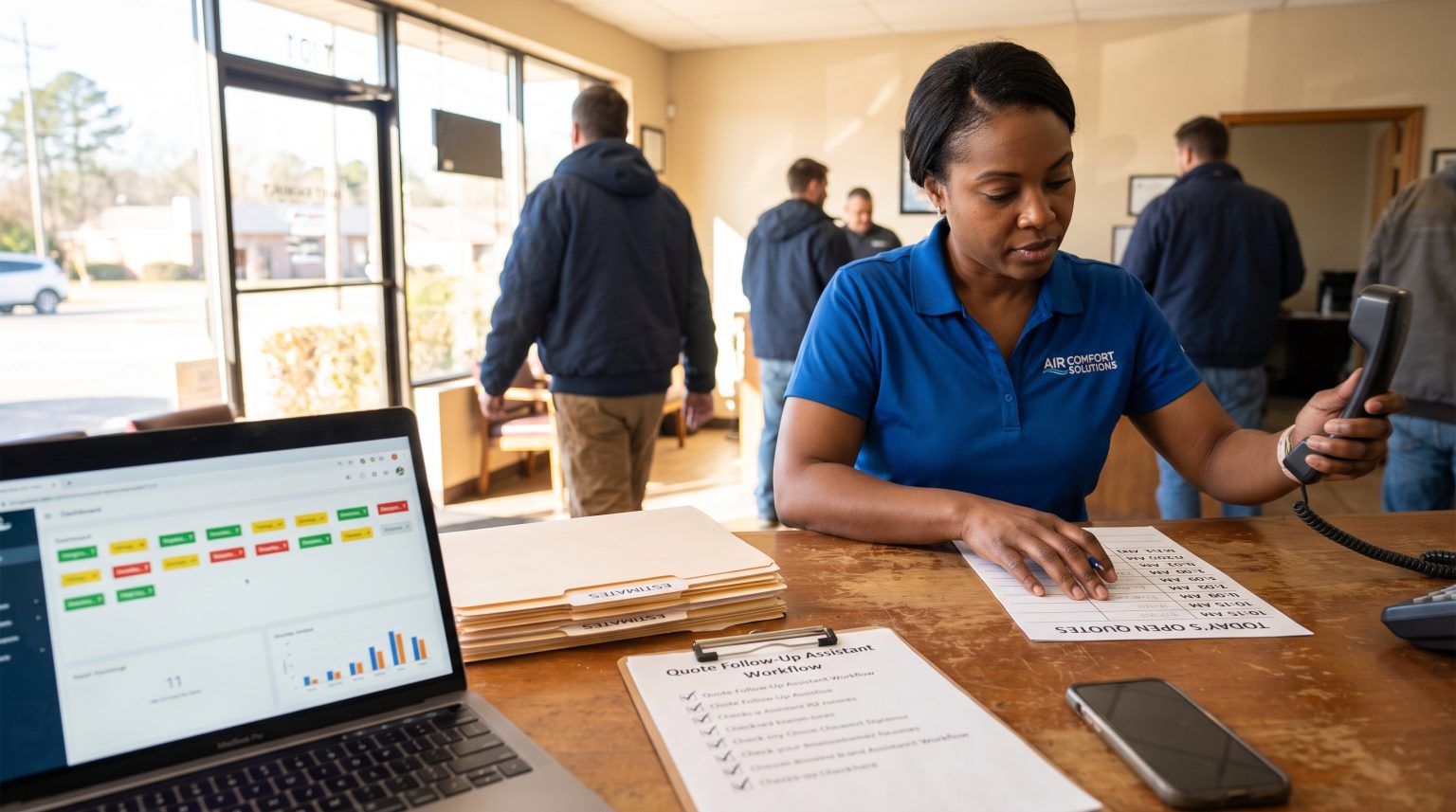
You spent time meeting with the prospect, prepared a detailed quote, and sent it off with confidence. Then nothing. Days pass, the lead goes cold, and the job goes to a competitor who simply followed up first. This scenario plays out across thousands of service businesses every week, and the revenue lost is rarely tracked because it never officially existed.
The problem is not that your pricing is wrong or that your service is lacking. The problem is follow-up, specifically the absence of it. A quote follow up assistant solves this problem systematically, turning a common business weakness into a reliable conversion engine.
Why Follow-Up Timing Is Everything
Buyer behavior research consistently shows that speed and persistence are the two most powerful variables in closing a sale. Studies indicate that 78% of customers buy from the first business to respond to their inquiry. Meanwhile, 80% of sales require five or more follow-ups, yet most businesses abandon the process after one or two attempts.
For service businesses, the situation is compounded by the fact that most prospects collect three to five quotes before making a decision. If your follow-up process is slower or less consistent than a competitor’s, you lose the job by default, not by merit. The quote that wins is often the one that stays top of mind through thoughtful, timely communication.
What Is a Quote Follow Up Assistant?
A quote follow up assistant is a system or person dedicated to managing the communication process after a quote has been sent to a prospect. This can take two forms. A manual assistant relies on human effort to track, schedule, and send follow-up messages. An automated assistant uses software, AI tools, or a trained virtual professional to handle this process without requiring the business owner to think about it.
In practice, the most effective approach combines automation with human oversight. Automated sequences handle the timing and delivery of messages, while a trained assistant monitors replies, handles objections, and escalates warm leads to the appropriate person. This is where a dedicated Doer from Doneverse adds significant value, bringing both the systems knowledge and the human judgment needed to convert prospects into paying clients.
How a Quote Follow Up Assistant Works: Step by Step
Understanding the process helps business owners see why a structured approach consistently outperforms ad hoc follow-up.
- Quote is sent: The moment a quote leaves your inbox or CRM, it is logged and a follow-up sequence is triggered.
- First follow-up (24 to 48 hours): A brief, friendly message checks in to confirm the prospect received the quote and invites any questions. This message is warm and non-pressuring.
- Second follow-up (four to five days later): A value-focused nudge reminds the prospect of the key benefits of your service and gently reinforces why acting sooner is beneficial.
- Third follow-up (seven to ten days later): A final message creates a soft close, indicating that the quote is available for a limited time or that your schedule is filling up, without sounding pushy.
- Reply handling: When a prospect responds at any stage, the sequence pauses immediately. A human assistant reviews the reply and takes the appropriate next step, whether that is answering a question, addressing a concern, or booking the job.
- Pipeline update: Every quote is tracked through open, won, and lost categories, giving the business owner full visibility into conversion performance.
Common Questions Business Owners Ask
Will the messages sound robotic or impersonal?
Not when they are written and managed correctly. Effective follow-up messages are short, conversational, and written in your business’s voice. They reference the specific job or project and invite a genuine response. The goal is to feel like a personal check-in, not a mass email blast.
Can a quote follow up assistant integrate with my CRM?
Yes. Most modern follow-up systems integrate with popular CRM and field service platforms including HubSpot, Jobber, Housecall Pro, and ServiceTitan. Integration ensures that no quote is missed and that your pipeline data stays accurate and current.
How many follow-ups are too many?
Three to four touches over a ten to fourteen day period is the standard best practice for most service businesses. Beyond that, the prospect has likely made a decision. The key is to stop the sequence the moment a reply is received, so no one feels over-contacted.
Manual Follow-Up vs. CRM Reminders vs. Dedicated Quote Follow Up Assistant
| Feature | Manual Follow-Up | CRM Reminders | Dedicated Quote Follow Up Assistant |
|---|---|---|---|
| Consistency | Low, dependent on memory | Medium, requires manual setup | High, automated and monitored |
| Personalization | High if done well | Low to medium | High, customized messaging |
| Time Required | Significant owner time | Moderate setup time | Minimal owner involvement |
| Reply Handling | Owner managed | Not included | Managed by assistant |
| Pipeline Visibility | Limited | Moderate | Full, real-time tracking |
| ROI Potential | Variable | Moderate | High, measurable conversion lift |
| Integration Flexibility | None | Platform dependent | Broad, multi-tool compatible |
Top Benefits of Using a Quote Follow Up Assistant
- Higher conversion rates: Consistent multi-touch follow-up converts more quotes into booked jobs without changing your pricing or service.
- Time savings: Business owners and estimators reclaim hours each week that were previously spent chasing unanswered quotes.
- Pipeline transparency: You always know the status of every open quote, which eliminates the anxiety of not knowing where jobs stand.
- Reduced admin burden: The repetitive work of tracking and messaging is handled by a system, freeing your team for higher-value tasks.
- Improved customer experience: Prospects feel attended to and respected, which builds trust even before the job begins.
- Competitive advantage: Most competitors are not following up consistently. A reliable system puts you ahead by default.
Real-World Results From Service Businesses
Service businesses that implement structured quote follow-up routinely report recovering jobs they assumed were lost. A plumbing company that moved from a single follow-up call to a three-touch email and SMS sequence saw its quote conversion rate increase significantly within the first month. An HVAC business saved more than twenty hours per week by delegating follow-up to a trained assistant, allowing its estimators to focus on generating new quotes rather than chasing old ones.
These outcomes are not exceptional. They are the predictable result of a consistent process applied to a problem that most businesses leave unmanaged. Doneverse client success stories reflect similar results across industries, from local service providers to professional service firms that have recovered meaningful revenue simply by closing the follow-up gap.
Whether you run a fitness studio, a financial advisory practice, or a real estate agency, the principle is the same. Sent quotes without follow-up are revenue left on the table. Businesses across a wide range of industries are putting this insight to work and seeing measurable results.
Key Tips for Implementing Quote Follow-Up in Your Business
Getting started does not require a complete overhaul of your current process. A few focused steps make a significant difference.
First, define your follow-up cadence before you build any sequences. Know how many touches you want to send, at what intervals, and through which channels. Email works well for detailed communication; SMS works well for brief, time-sensitive nudges.
Second, write your messages in advance and review them for tone. Every message should feel like it came from a person, not a platform. Keep them short, specific to the prospect’s situation, and clear about the next step you are inviting them to take.
Third, integrate your follow-up system with your existing quoting or CRM tool so that no quote enters your pipeline without triggering a sequence. Manual tracking is where follow-up falls apart most often.
Fourth, assign someone to monitor replies and manage conversations. Automation handles the outreach; a trained assistant handles the human side. This combination produces the best results.
Actionable Takeaways to Start Today
If you want to begin recovering lost revenue from unanswered quotes, here is a practical starting point. Audit your last thirty days of sent quotes and identify how many received at least two follow-up touches. That number will tell you exactly how much opportunity you are leaving behind.
From there, map out a simple three-step sequence with defined timing and draft the messages. Test it manually for two weeks, then look at whether a dedicated assistant or automation tool can take over the execution so you can focus on running your business.
The Doneverse Growth System is built around exactly this kind of structured execution, pairing strategy with dedicated support so business owners stop losing revenue to process gaps.
Stop Letting Quotes Go Cold
Every unanswered quote is a conversation that deserves a second chance. A quote follow up assistant gives you that chance, consistently, professionally, and without adding to your workload. The businesses winning more jobs are not always the ones with the best prices. They are the ones with the best follow-up.
If you are ready to stop losing leads to inaction, Doneverse can match you with a dedicated assistant who will manage your quote follow-up process from start to close. Book a call today and find out how much revenue your current process is leaving behind.