

Marketing for Small Business: Proven Strategies and Virtual Assistant Solutions for Your Industry
Running a small business means wearing multiple hats, but marketing shouldn’t feel like an impossible juggling act. Whether you’re a marketing agency, coaching consultant, local gym owner, HVAC contractor, or e-commerce entrepreneur, the challenge remains the same: how do you create effective marketing campaigns that drive real results without burning out your team or breaking your budget?
The truth is, marketing for small business success requires more than just posting on social media or sending occasional emails. It demands industry-specific strategies, consistent execution, and the ability to adapt quickly to changing customer behaviors. Most small business owners know they need better marketing, but they struggle with limited time, resources, and specialized knowledge.
The Marketing Challenge: Why Small Businesses Struggle to Keep Up
Small businesses face unique marketing obstacles that larger corporations simply don’t encounter. With 73% of small businesses now maintaining websites and e-commerce accounting for over 20% of retail sales, the pressure to maintain a strong digital presence has never been higher.
The primary challenges include:
- Limited Resources: Small teams mean everyone is already stretched thin handling daily operations
- Knowledge Gaps: Marketing tactics that work for restaurants don’t necessarily work for accounting firms
- Time Constraints: Creating quality content, managing multiple platforms, and analyzing performance takes significant time
- Budget Restrictions: Hiring full-time marketing specialists often isn’t financially feasible
- Technology Overwhelm: With 53% of businesses now using AI-powered tools, keeping up with marketing technology feels impossible
These challenges leave many small business owners feeling frustrated and falling behind competitors who seem to have mastered digital marketing effortlessly.
Digital Transformation: How Industry-Specific Tactics Bridge the Gap
The solution isn’t trying to do everything yourself or copying what works for other industries. Instead, successful marketing for small business requires understanding your specific industry dynamics and implementing targeted strategies that resonate with your unique customer base.
Modern marketing success comes from combining industry-specific knowledge with consistent execution. This is where virtual marketing assistants become invaluable, providing the specialized skills and dedicated time needed to implement effective campaigns without the overhead of full-time employees.
Building a Strong Online Presence for Your Industry
Different industries require different approaches to online presence. Here’s how to tailor your strategy:
Local Service Businesses (Gyms, HVAC, Healthcare)
Google Business Profile optimization is crucial. Complete your profile with high-quality images, regular updates, and active review management. Local service businesses see dramatic improvements when they consistently engage with customer reviews and post relevant updates about services or seasonal offerings.
Professional Services (Financial, Legal, Creative)
LinkedIn becomes your primary platform for establishing thought leadership. Share industry insights, case studies, and educational content that demonstrates expertise. Professional service providers benefit from longer-form content that showcases knowledge depth.
E-commerce and Retail
Visual platforms like Instagram and Pinterest drive product discovery. High-quality product photography, user-generated content, and strategic hashtag use create authentic connections with potential customers. Boutiques and retail businesses often see 25% increases in followers through consistent visual storytelling.
B2B Services and Agencies
Content marketing through blogs, whitepapers, and webinars establishes authority. B2B buyers research extensively before making decisions, so providing valuable educational content throughout their journey builds trust and positions your business as the obvious choice.
Social Media and Content: Platform Selection by Industry
Choosing the right platforms and content types dramatically impacts your marketing for small business success:
Short-Form Video Content
Restaurants and food service businesses thrive on TikTok and Instagram Reels, showing behind-the-scenes preparation, signature dishes, and customer reactions. These authentic moments create emotional connections that drive foot traffic.
Educational Content
Legal services, healthcare providers, and financial advisors build trust through educational content addressing common client questions. FAQ videos, how-to guides, and myth-busting posts position these professionals as helpful experts rather than pushy salespeople.
Community-Focused Content
Local gyms and fitness centers excel with community-building content showcasing member success stories, group classes, and wellness tips. This approach creates belonging and motivation that keeps members engaged long-term.
Project Showcases
Architects, contractors, and creative professionals use visual before-and-after content, time-lapse videos, and detailed project breakdowns to demonstrate capabilities and build credibility with potential clients.
Email Marketing, Paid Ads, and Community Building
Effective outreach strategies vary significantly by industry:
Email Marketing: Professional services benefit from educational newsletters, while e-commerce businesses see better results with product-focused campaigns and abandoned cart sequences. Real estate agents excel with market updates and property alerts tailored to specific buyer interests.
Paid Advertising: Google Ads work exceptionally well for local services with high intent keywords like “emergency plumber” or “personal trainer near me.” Social media ads perform better for businesses with visual products or services that benefit from detailed targeting options.
Community Building: Local businesses should actively participate in community events, sponsor local activities, and cross-promote with complementary businesses. These relationships often generate more qualified referrals than digital advertising alone.
Managing these diverse strategies requires significant time and expertise, which is why many successful small businesses partner with dedicated virtual marketing assistants who understand their industry dynamics.
DIY Marketing vs. Virtual Marketing Assistant: A Comprehensive Comparison
| Aspect | DIY Marketing | Pre-Trained Virtual Assistant |
|---|---|---|
| Initial Cost | Low upfront investment | Predictable monthly investment |
| Time Investment | 20-30 hours per week | 2-3 hours per week for oversight |
| Learning Curve | Steep, ongoing education required | Immediate expertise available |
| Consistency | Often inconsistent due to other priorities | Reliable, scheduled execution |
| Results Timeline | 6-12 months to see significant results | 3-6 months with professional execution |
| Scalability | Limited by personal capacity | Easily scalable with business growth |
Common Small Business Marketing Questions Answered
How do I choose the right platform for my industry?
Focus on where your customers spend time and consume content. B2B services should prioritize LinkedIn and email marketing. Visual businesses like restaurants or boutiques succeed on Instagram and TikTok. Local services need strong Google Business presence and community engagement.
What can a virtual assistant do for my specific marketing needs?
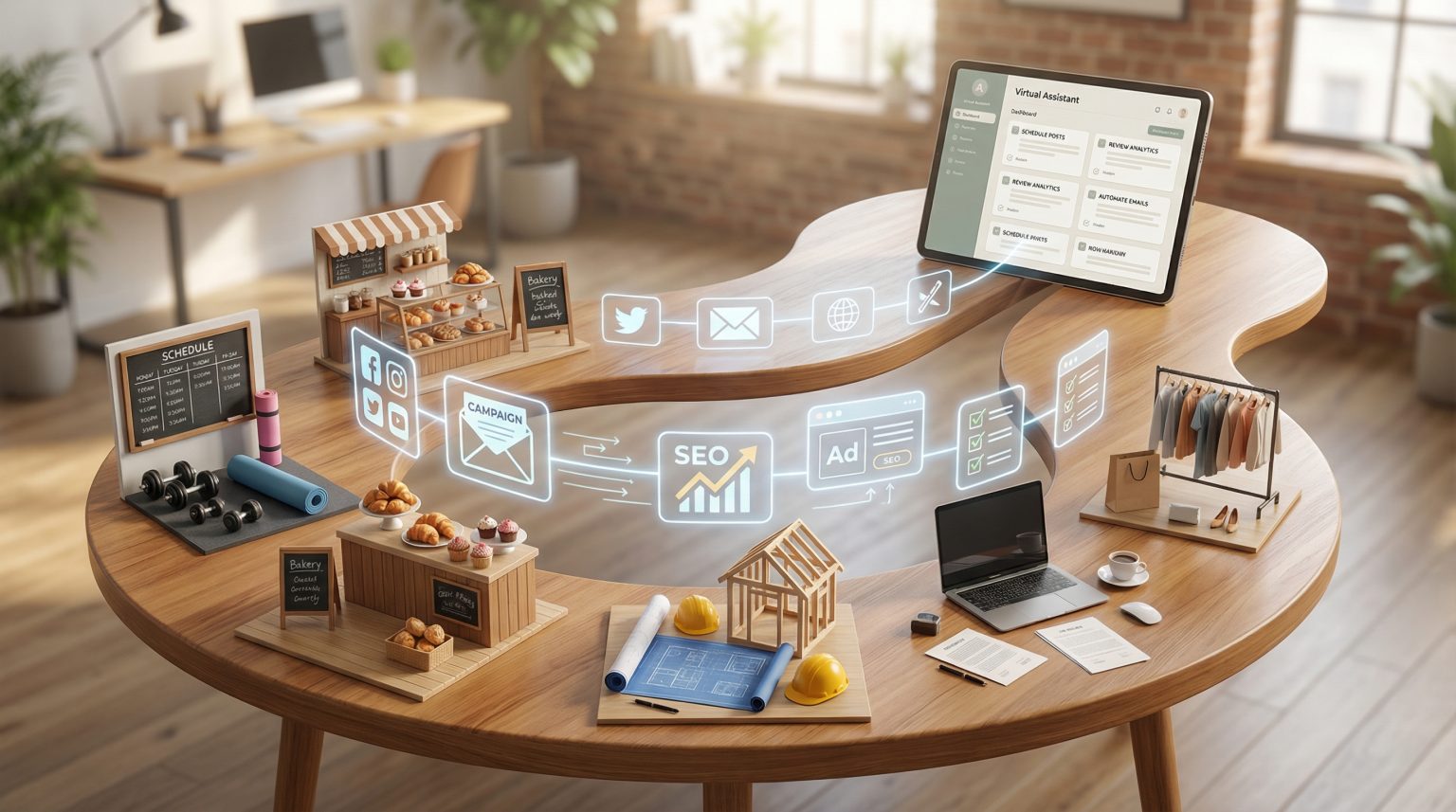
Virtual marketing assistants can handle content creation, social media management, email campaigns, SEO optimization, paid ad management, customer communications, and performance analytics. They adapt their approach based on your industry requirements and business goals.
How quickly should I expect to see marketing results?
Digital marketing typically shows initial engagement within 30-60 days, with significant business impact occurring around 3-6 months of consistent execution. Industries with longer sales cycles may see results over 6-12 months.
What’s the most cost-effective marketing strategy for small businesses?
Content marketing combined with email marketing typically provides the highest ROI for most small businesses. However, the most effective strategy depends on your industry, target audience, and business goals.
Success Stories: Real Results from Industry-Specific Marketing
A local bakery increased foot traffic by 30% through consistent Google Business Profile management and Instagram content showcasing daily fresh items. Their virtual marketing assistant managed daily posts, customer review responses, and seasonal campaign execution.
A consulting firm generated 40% more qualified leads by implementing a LinkedIn content strategy combined with targeted email sequences. Their dedicated assistant created weekly thought leadership posts and managed nurture campaigns for potential clients.
An e-commerce boutique achieved 25% follower growth and 35% increase in online sales through strategic Instagram marketing, influencer partnerships, and email marketing automation managed by their virtual marketing specialist.
These businesses succeeded because they implemented industry-specific strategies consistently, supported by dedicated marketing expertise that understood their unique challenges and opportunities.
5 Steps to Launch Your Industry-Specific Marketing Plan
Step 1: Audit Your Current Marketing Presence
Evaluate your website, social media profiles, Google Business listing, and current marketing activities. Identify gaps and opportunities specific to your industry standards.
Step 2: Define Your Target Customer by Industry Segment
Create detailed customer personas that reflect your industry’s unique buying behaviors, pain points, and communication preferences. B2B buyers research differently than local service customers.
Step 3: Choose Your Primary Marketing Channels
Select 2-3 platforms where your customers are most active and engaged. Focus on mastering these before expanding to additional channels.
Step 4: Create an Industry-Specific Content Calendar
Plan content that addresses seasonal trends, industry events, and customer needs specific to your business type. Consistency matters more than perfection.
Step 5: Implement Measurement and Optimization Systems
Set up tracking for key performance indicators relevant to your industry and business goals. Regular analysis allows for continuous improvement and better results.
Successful marketing for small business requires industry expertise, consistent execution, and ongoing optimization. While you can attempt to manage everything yourself, partnering with a pre-trained virtual marketing assistant allows you to focus on running your business while ensuring your marketing efforts drive real growth.
Ready to transform your marketing results without the overwhelm? Connect with a pre-trained virtual marketing assistant today and discover how industry-specific marketing strategies can accelerate your business growth while saving you valuable time and resources.