


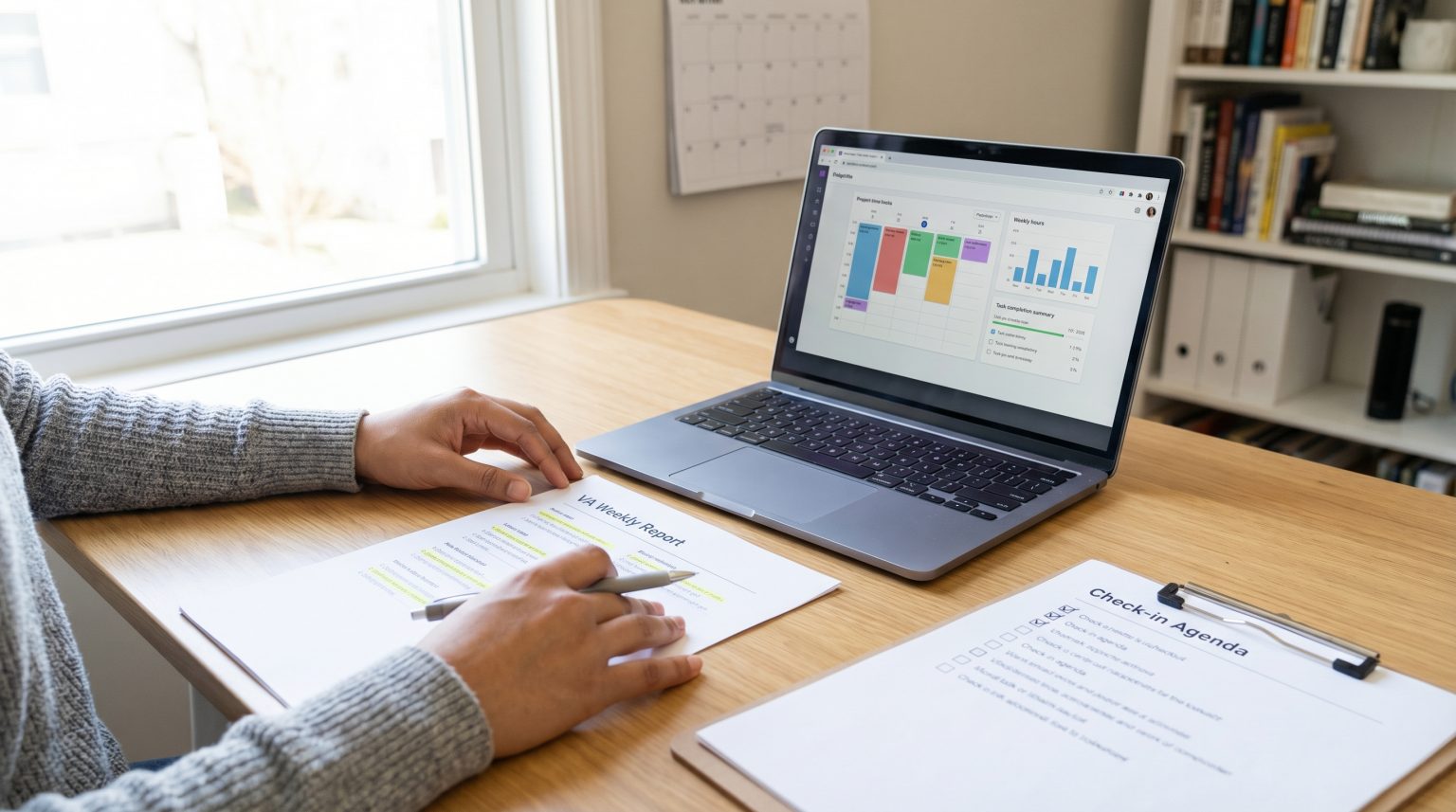
Managing virtual assistants remotely presents unique challenges that traditional in-office management simply doesn’t address. Business owners often struggle with questions like “Is my VA actually working during their scheduled hours?” and “How do I balance accountability with trust?” These concerns are completely valid, especially when you’re investing in someone to handle critical business tasks from hundreds or thousands of miles away.
The solution isn’t to micromanage or implement invasive surveillance. Instead, successful business owners learn how to monitor virtual assistants using structured, transparent systems that build trust while ensuring productivity. This approach protects your investment while empowering your virtual team to perform at their best.
Why Strategic Monitoring Actually Improves Business Outcomes
Effective monitoring isn’t about surveillance or distrust. It’s about creating clarity, accountability, and mutual success. When implemented correctly, monitoring systems benefit both business owners and virtual assistants by establishing clear expectations and providing data-driven insights into productivity patterns.
Research shows that businesses using structured oversight for remote workers see productivity improvements of up to 50%. This isn’t because monitoring forces people to work harder, but because it eliminates guesswork, identifies workflow bottlenecks, and provides the transparency both parties need to optimize their working relationship.
For virtual assistants, proper monitoring actually reduces stress. Instead of wondering whether their work meets expectations, they receive clear feedback based on objective data. This creates a professional environment where performance discussions are based on facts rather than assumptions.
Choosing the Right Monitoring Tools: A Comprehensive Comparison
The market offers dozens of time-tracking and productivity monitoring solutions, each with different strengths. Here’s a detailed comparison of the leading platforms for monitoring virtual assistants:
| Tool | Monthly Cost | Key Features | Best For | Privacy Level |
|---|---|---|---|---|
| Toggl Track | $9-18/user | Time tracking, project organization, detailed reports | Privacy-focused monitoring | High |
| Clockify | Free-$12/user | Unlimited tracking, team dashboards, invoicing | Growing businesses | High |
| Time Doctor | $7-20/user | Screenshots, activity monitoring, payroll integration | Detailed oversight needs | Medium |
| Harvest | $12/user | Time tracking, expense tracking, advanced invoicing | Service-based businesses | High |
| Hubstaff | $7-20/user | Activity levels, GPS tracking, automatic payroll | Field and remote teams | Low-Medium |
When selecting a tool, consider your specific needs. If you’re working with pre-trained virtual marketing assistants, you’ll want platforms that integrate well with marketing tools and provide clear project-based reporting.
Understanding Non-Invasive vs. Invasive Monitoring Methods
The monitoring approach you choose significantly impacts the trust and productivity of your working relationship. Understanding the difference between invasive and non-invasive methods helps you make better decisions.
Non-Invasive “Green” Monitoring
Non-invasive monitoring focuses on results and time allocation without constant surveillance. This includes:
- Time tracking with project categorization
- Task completion reporting
- Regular check-ins and milestone reviews
- Goal-based performance metrics
This approach builds long-term trust and often results in higher quality work because virtual assistants feel respected and empowered.
Invasive Monitoring Methods
More invasive approaches include:
- Constant screenshot capture
- Keystroke logging
- Real-time screen sharing
- Webcam monitoring
While these methods provide detailed oversight, they can damage trust and may actually decrease productivity by creating a stressful work environment.
Best Practices for Monitoring Virtual Assistants
Set Clear Goals and Expectations
Before implementing any monitoring system, establish clear performance expectations. Define what success looks like for each role, project timeline, and quality standard. Your virtual assistant should understand exactly how their performance will be measured.
Implement Regular Communication Rhythms
Schedule consistent check-ins, whether daily quick updates or weekly detailed reviews. These conversations should focus on progress, challenges, and optimization opportunities rather than just monitoring compliance.
Maintain Transparency About Monitoring Policies
Be upfront about what you’re tracking and why. Explain how the data will be used and who has access to it. This transparency builds trust and ensures your virtual assistant understands the professional nature of the oversight.
Provide Proper Onboarding and Training
Invest time in training both yourself and your virtual assistant on the monitoring tools and processes. This prevents confusion and ensures everyone can use the systems effectively.
Companies like Doneverse handle much of this complexity by providing pre-trained assistants who already understand professional monitoring standards and come equipped with proven tracking systems.
Step-by-Step Implementation Guide
Step 1: Choose Your Monitoring Platform
Select a tool based on your privacy preferences, budget, and integration needs. Start with free trials to test usability before committing.
Step 2: Configure Projects and Categories
Set up project categories that align with your business needs. For example, if you’re working with marketing assistants, create categories for content creation, social media management, email marketing, and administrative tasks.
Step 3: Establish Reporting Schedules
Determine how often you want to review data. Weekly reports typically provide enough insight without becoming overwhelming for either party.
Step 4: Train Your Virtual Assistant
Provide clear instructions on how to use the tracking system, including when to start and stop timers, how to categorize work, and what information to include in task descriptions.
Step 5: Review and Optimize
Regularly review the monitoring data to identify patterns, bottlenecks, or optimization opportunities. Use this information to improve processes rather than just evaluate performance.
Frequently Asked Questions About Virtual Assistant Monitoring
How do I know my virtual assistant is actually working during tracked time?
Look for consistent patterns in time logs, regular task completion, and quality output. Activity monitoring tools can show computer usage patterns, but focus more on results than minute-by-minute activity.
What level of monitoring is fair and professional?
Fair monitoring focuses on time allocation, task completion, and results rather than constant surveillance. Your virtual assistant should feel trusted while providing the accountability you need.
How should I address underperformance identified through monitoring?
Use monitoring data as a starting point for constructive conversations. Look for patterns like consistently missed deadlines, low productivity periods, or quality issues. Address these through additional training, process improvements, or clearer expectations.
Can monitoring tools integrate with other business systems?
Most professional monitoring tools integrate with project management platforms, accounting software, and communication tools. This integration streamlines workflows and reduces administrative overhead.
How do I maintain privacy while ensuring accountability?
Choose tools that track time and tasks without invasive surveillance. Focus on project-based reporting rather than detailed activity monitoring. Be transparent about what data you collect and how it’s used.
Building Trust Through Effective Monitoring
The most successful virtual assistant relationships combine accountability with trust. This means using monitoring data to support and improve your assistant’s work rather than just evaluate it. When virtual assistants see monitoring as a tool for mutual success rather than surveillance, they’re more likely to engage proactively and suggest improvements.
Regular feedback based on monitoring data helps virtual assistants understand your priorities and optimize their approach. This creates a positive cycle where better data leads to better performance, which builds stronger trust over time.
Actionable Monitoring Success Checklist
Use this checklist to implement effective virtual assistant monitoring:
- Select a monitoring tool that matches your privacy preferences and budget
- Set up clear project categories and tracking guidelines
- Communicate monitoring policies transparently during onboarding
- Establish regular reporting and review schedules
- Train your virtual assistant on proper tool usage
- Focus feedback on results and improvements, not just compliance
- Review and optimize your monitoring approach regularly
- Use data to identify opportunities for better processes
- Maintain open communication about challenges and successes
- Celebrate improvements and achievements identified through monitoring
Quick Reference: Leading Virtual Assistant Monitoring Solutions
| Business Need | Recommended Tool | Why It Works |
|---|---|---|
| Privacy-focused monitoring | Toggl Track or Clockify | Time tracking without surveillance features |
| Detailed activity oversight | Time Doctor or Hubstaff | Activity monitoring with productivity insights |
| Budget-conscious businesses | Clockify or Simple Time Tracker | Comprehensive free plans available |
| Service businesses with billing needs | Harvest or My Hours | Integrated invoicing and expense tracking |
| Growing agencies | Everhour or TimeCamp | Scalable team management features |
The Future of Virtual Assistant Management
Effective monitoring transforms virtual assistant relationships from transactional arrangements into strategic partnerships. When both parties have clear visibility into work patterns, productivity metrics, and results, they can collaborate more effectively to achieve business goals.
The businesses that succeed with virtual assistants are those that view monitoring as an investment in mutual success rather than a necessary evil. This approach leads to better outcomes, stronger relationships, and more sustainable growth.
Rather than spending time learning how to implement and manage these monitoring systems yourself, consider working with a service that handles the complexity for you. Successful businesses often find that partnering with experienced providers eliminates the trial and error of building effective monitoring systems from scratch.
Ready to work with a pre-trained, accountable virtual marketing assistant who already understands professional monitoring standards? Apply now to get matched with your dedicated Doer and start experiencing the benefits of structured, trust-based virtual assistant management.