


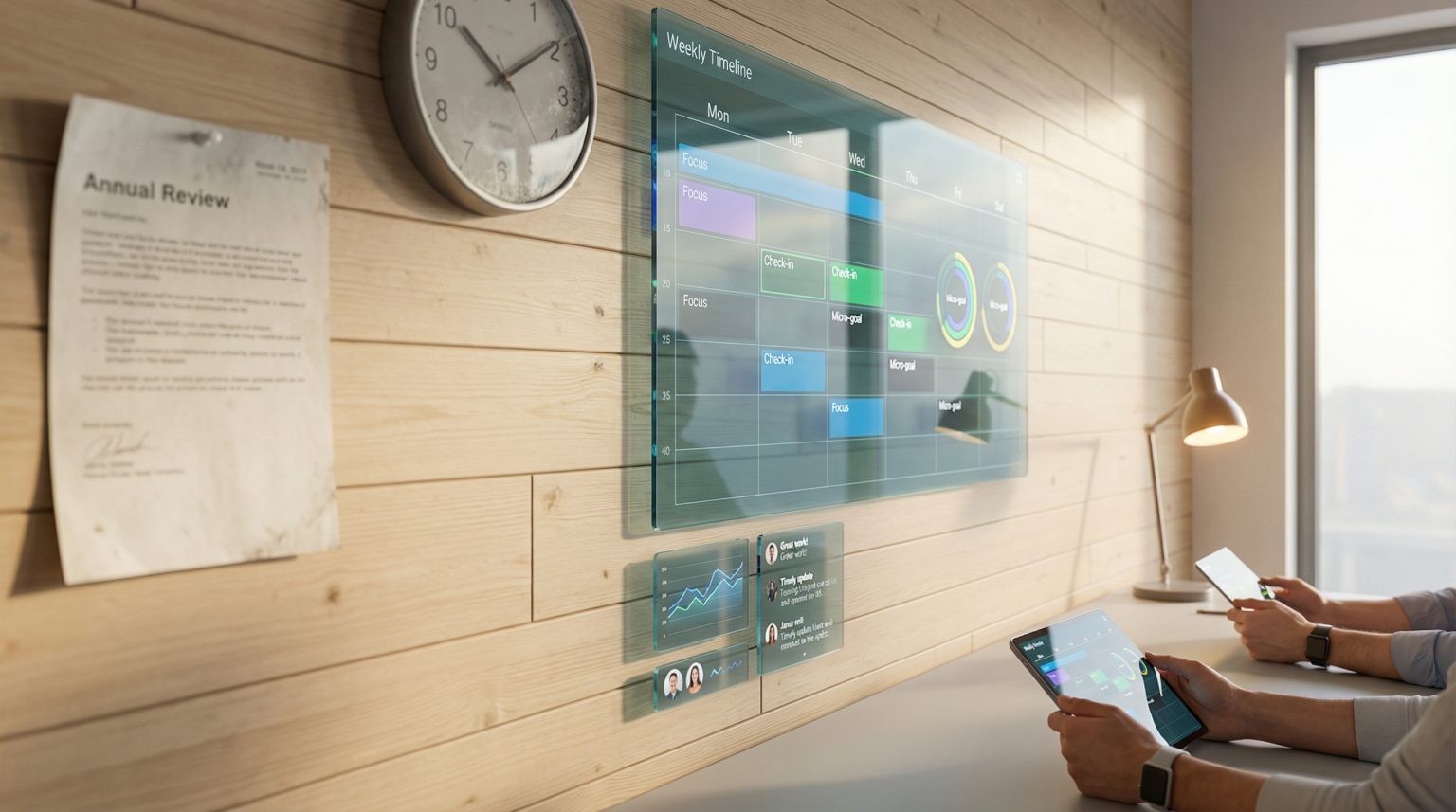
Poor virtual assistant performance costs businesses more than just time. When your dedicated assistant struggles with productivity, the ripple effects hit every corner of your operation: missed deadlines derail client projects, scattered focus burns out both you and your team, and ultimately, client dissatisfaction threatens your reputation and revenue.
The stakes are particularly high when you’re working with virtual marketing assistants. Unlike in-house employees where you can walk over for a quick check-in, managing remote performance requires intentional systems, clear communication, and the right technology stack.
Yet most business owners still rely on outdated management approaches that simply don’t work for virtual teams. Annual reviews, sporadic feedback, and ad hoc oversight leave both managers and assistants frustrated, unproductive, and disconnected from business goals.
Why Traditional Performance Management Fails Virtual Teams
Traditional annual reviews and inconsistent oversight create significant gaps in virtual team management. Research shows that only 2% of CHROs believe their current performance management systems work effectively, and the problems are magnified when managing remote assistants.
The core issues with conventional approaches include delayed feedback that arrives too late to course-correct, lack of real-time visibility into daily productivity patterns, and minimal connection between assistant tasks and broader business objectives. When your virtual assistant works independently for weeks without structured check-ins, small problems compound into major performance issues.
Virtual teams need different management approaches because remote work eliminates the natural accountability and connection that comes from shared physical space. Without intentional systems, even highly skilled assistants can drift off course or struggle with time management challenges that remain invisible until they impact client deliverables.
The Solution: Continuous Performance Management for Virtual Teams
Modern how to manage doer performance strategies center on continuous engagement rather than periodic evaluation. This approach transforms the traditional manager-employee relationship into an ongoing coaching partnership focused on growth, clarity, and results.
Continuous performance management means regular touchpoints, real-time feedback, and proactive support rather than reactive problem-solving. For virtual assistants, this creates the structure and connection needed to perform at their highest level while maintaining the autonomy that makes remote work effective.
The most successful virtual team managers use weekly check-ins, project-based feedback loops, and technology-enabled transparency to keep their assistants engaged and productive. This approach has been shown to increase employee engagement by 90% compared to quarterly reviews.
The Critical Link Between Time Management and Doer Performance
Time management directly impacts every aspect of virtual assistant performance. Studies reveal that only 27% of work time is typically spent on skilled, value-adding tasks, while up to 60% gets consumed by “work about work” including communication inefficiencies, document searching, and duplicated efforts.
For virtual assistants, poor time management creates cascading problems: missed deadlines damage client relationships, task switching reduces work quality, and inefficient processes waste billable hours. When assistants lack structured time management systems, they often work longer hours while producing less meaningful results.
The statistics are telling: workers using dedicated time management systems report significantly higher job satisfaction and performance ratings, while those without structured approaches frequently experience stress, overtime, and burnout. For business owners, this translates directly to assistant retention, client satisfaction, and overall ROI on virtual team investments.
What Are the Most Common Productivity Drains for Virtual Assistants?
The biggest productivity challenges for virtual assistants include app overload where using 16+ different tools reduces focus and creates up to 9.6 hours of lost time weekly, communication fragmentation across multiple platforms leading to missed messages and duplicated work, and lack of clear prioritization frameworks resulting in reactive rather than strategic work patterns.
Context switching between different client projects without proper transition protocols also significantly impacts productivity, as does insufficient uninterrupted focus time. Research shows 68% of employees report lacking adequate deep work periods, a problem that’s amplified for virtual assistants managing multiple client demands.
Classic vs Modern Performance Management for Virtual Assistants
| Aspect | Classic Approach | Modern Approach |
|---|---|---|
| Review Frequency | Annual or semi-annual reviews | Weekly check-ins with ongoing feedback |
| Goal Setting | Top-down annual objectives | Collaborative micro-goals with regular adjustment |
| Communication | Formal meetings and email updates | Real-time messaging with structured touchpoints |
| Performance Tracking | Subjective assessments | Data-driven analytics with time tracking |
| Development Focus | Addressing past performance gaps | Proactive skill building for future needs |
| Recognition | Annual bonuses or promotions | Regular acknowledgment and career opportunities |
Essential Time Management Techniques for Virtual Assistants
The most effective time management techniques for virtual assistants include the Eisenhower Matrix for prioritizing tasks based on urgency and importance, helping assistants focus on high-impact activities rather than getting caught in reactive work patterns.
Pomodoro Technique works exceptionally well for virtual assistants managing multiple client projects, as 25-minute focused work blocks with short breaks maintain energy and concentration throughout the day. This technique is particularly valuable for tasks requiring deep focus like content creation or data analysis.
Timeboxing helps virtual assistants allocate specific time periods to different clients or project types, preventing any single task from expanding beyond its allocated time. This technique ensures balanced attention across multiple responsibilities while maintaining clear boundaries.
The “Who’s Got the Monkey” approach clarifies task ownership and follow-up responsibilities, essential for virtual assistants who often coordinate between multiple stakeholders. This technique prevents tasks from falling through cracks and ensures clear accountability for deliverables.
Matching Time Management Strategies to Assistant Personality Types
Different personality types respond better to specific time management approaches. Detail-oriented assistants often excel with structured systems like time blocking and comprehensive task lists, while creative personalities may prefer flexible frameworks like the Rapid Planning Method that allows for adaptation and inspiration-driven work.
Assistants who tend toward perfectionism benefit from timeboxing and “good enough” guidelines that prevent over-polishing, while those prone to procrastination respond well to the “Eat That Frog” approach of tackling challenging tasks first when energy is highest.
How Often Should You Give Feedback to Your Virtual Assistant?
Optimal feedback frequency for virtual assistants is weekly for ongoing projects and immediately following major deliverables. Research shows that 77% of employees feel more motivated when they receive regular developmental feedback compared to annual review cycles.
The most effective feedback combines brief weekly check-ins to address immediate questions and monthly deeper conversations about skill development and goal progress. Tools like Slack for daily communication, project management platforms for task-specific feedback, and video calls for comprehensive discussions create a complete feedback ecosystem.
Technology Stack for Virtual Assistant Performance Management
Effective virtual assistant management requires integrated technology solutions that provide visibility, streamline communication, and automate routine oversight tasks. Time tracking tools like RescueTime or Toggl help both managers and assistants understand productivity patterns and identify improvement opportunities.
Performance analytics platforms enable data-driven decision making by tracking completion rates, quality metrics, and client satisfaction scores. Communication tools should integrate with project management systems to create seamless workflows that don’t require constant platform switching.
The most successful virtual team managers use platforms that combine real-time feedback capabilities, goal tracking functionality, and recognition modules that celebrate achievements and milestones. This integrated approach eliminates administrative overhead while maintaining strong performance oversight.
Essential Features in Performance Management Tools
Key features for virtual assistant performance management include real-time feedback capabilities that allow immediate course correction, comprehensive goal tracking that connects daily tasks to broader objectives, and analytics dashboards that reveal productivity trends and improvement opportunities.
Recognition modules that enable easy acknowledgment of achievements help maintain engagement and motivation in remote work environments. Integration capabilities ensure that performance management doesn’t require separate workflows, while mobile accessibility allows for feedback and communication from anywhere.
Automated reporting features save management time while providing consistent visibility into assistant performance, and customizable workflows accommodate different client requirements and project types.
Setting Clear and Motivating Goals for Virtual Assistants
Effective goal setting for virtual assistants requires SMART criteria (Specific, Measurable, Achievable, Relevant, Time-bound) combined with clear connection to client outcomes. Rather than focusing solely on task completion, goals should emphasize results and impact.
Micro-goals work particularly well for virtual assistants, as they provide frequent achievement opportunities and allow for rapid adaptation to changing client needs. These shorter-term objectives maintain momentum while building toward larger strategic outcomes.
Client-aligned objectives ensure that assistant goals directly support business outcomes, creating clear value propositions and making performance discussions more meaningful. When assistants understand how their work impacts client success, engagement and quality naturally improve.
What Does Recognition Look Like in a Virtual Environment?
Virtual recognition requires intentional effort since casual acknowledgment opportunities don’t occur naturally. Effective recognition for virtual assistants includes public acknowledgment in team communications, specific feedback about impact on client outcomes, and career development opportunities that demonstrate investment in their growth.
Recognition should be immediate, specific, and authentic. Rather than generic “good job” messages, effective recognition details what was accomplished, why it mattered, and how it contributed to larger objectives. This approach makes recognition meaningful and reinforces desired behaviors.
Implementing Your Virtual Assistant Performance Management System
Start by establishing weekly check-in schedules with structured agendas that cover current projects, upcoming priorities, and any support needed. These consistent touchpoints create accountability and connection without micromanagement.
Implement time tracking and analytics tools to gather baseline performance data, then use this information to identify optimization opportunities and set realistic improvement targets. Focus on one or two key areas for improvement rather than trying to address everything simultaneously.
Create clear communication protocols that specify which platforms to use for different types of interactions, response time expectations, and escalation procedures for urgent issues. This eliminates confusion and ensures important information doesn’t get lost.
Develop recognition and feedback systems that celebrate achievements while providing constructive guidance for improvement. Regular positive reinforcement maintains motivation, while timely corrective feedback prevents small issues from becoming larger problems.
Ready to optimize your virtual assistant’s performance and transform your business operations? Book a consultation with Doneverse and discover how our pre-trained virtual marketing assistants can deliver exceptional results with built-in performance management systems that ensure consistent, high-quality support for your business.