


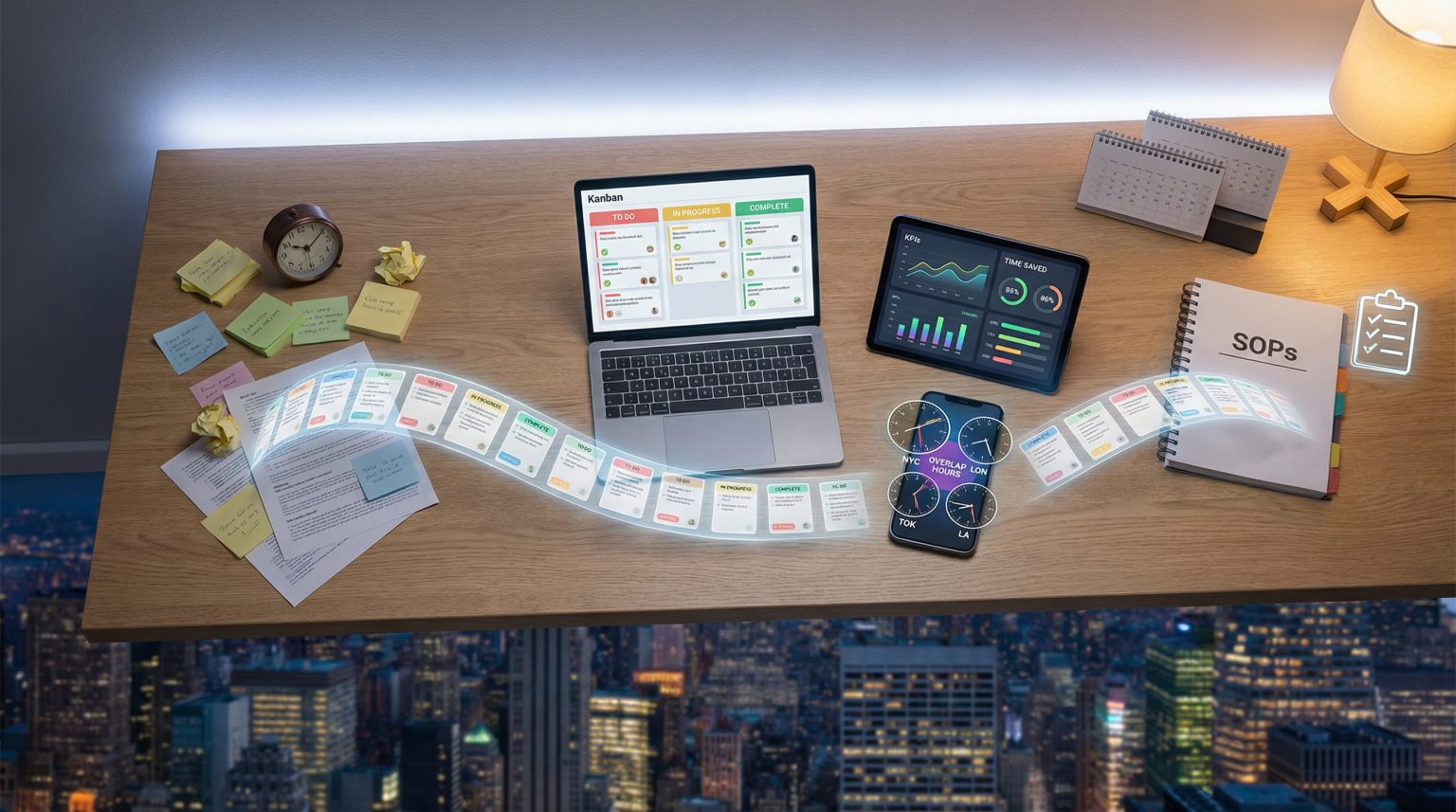
How to Manage Remote Assistants for Optimal Time Management: Tools, Strategies, and Best Practices
Managing remote assistants has become a critical skill for modern business owners. Unlike traditional in-office employees, remote assistants require different management approaches, clearer communication protocols, and strategic time management frameworks to deliver optimal results. When done correctly, effective remote assistant management can transform your productivity, reduce operational stress, and create sustainable business growth.
The challenge lies in bridging the physical distance while maintaining accountability, ensuring consistent quality, and maximizing the return on your investment in virtual support. This comprehensive guide will walk you through proven strategies, essential tools, and best practices for how to manage remote assistants effectively.
Common Problems When Managing Remote Assistants
Business owners frequently encounter several challenges when learning how to manage remote assistants. Communication gaps often lead to misunderstood instructions, missed deadlines, and frustrated clients. Without proper systems in place, tasks can fall through the cracks, creating bottlenecks that actually increase rather than decrease your workload.
Overwhelm becomes a significant issue when business owners attempt to micromanage every aspect of their remote assistant’s work. This defeats the purpose of delegation and often results in both parties feeling stressed and unproductive. Additionally, without clear performance metrics and accountability structures, it becomes difficult to measure success and identify areas for improvement.
Time zone differences compound these challenges, making real-time collaboration difficult and potentially creating delays in project completion. Many business owners also struggle with scope creep, where assistants take on tasks outside their original job description without proper planning or compensation adjustments.
What Effective Remote Assistant Management Looks Like
Successful remote assistant management centers on clear systems, consistent communication, and strategic delegation. Effective managers establish comprehensive onboarding processes, utilize appropriate technology tools, and create accountability structures that promote both independence and results.
The most successful remote assistant relationships feature regular check-ins, well-documented processes, and performance tracking that focuses on outcomes rather than hours worked. Business owners who excel at managing remote assistants typically invest time upfront in training and system development, which pays dividends in long-term productivity and reduced management overhead.
Essential Onboarding Steps for Remote Assistants
Proper onboarding sets the foundation for how to manage remote assistants successfully. Begin by creating detailed job descriptions that outline specific responsibilities, expected deliverables, and performance metrics. Establish clear communication protocols, including preferred channels, response time expectations, and meeting schedules.
Develop comprehensive Standard Operating Procedures (SOPs) for all recurring tasks. These should include step-by-step instructions, quality standards, and examples of completed work. Video walkthroughs can be particularly effective for complex processes.
Set up access to all necessary tools and platforms during the first week, ensuring your assistant has everything needed to perform their duties independently. Create a shared resource hub containing brand guidelines, templates, contact lists, and frequently asked questions.
Establish Key Performance Indicators (KPIs) that align with your business objectives. These might include task completion rates, quality scores, response times, or specific business metrics like lead generation numbers or content production targets.
Time Management Frameworks for Remote Assistant Success
Implementing structured time management frameworks is crucial for how to manage remote assistants effectively. The Eisenhower Matrix helps assistants prioritize tasks by categorizing them into urgent/important quadrants, ensuring high-impact activities receive appropriate attention.
Time-blocking allows assistants to dedicate specific periods to different types of work, reducing context switching and improving focus. Encourage your assistant to batch similar tasks together, such as responding to emails, creating content, or handling administrative duties.
The Pomodoro Technique can enhance productivity by breaking work into focused 25-minute intervals followed by short breaks. This approach helps maintain energy levels and prevents burnout during intensive work periods.
Essential Digital Tools for Remote Assistant Management
The right technology stack is fundamental to successful remote assistant management. Here’s a comparison of top tools for different management aspects:
| Tool Category | Best Options | Key Features | Best For |
|---|---|---|---|
| Project Management | Asana, ClickUp, Notion | Task tracking, deadlines, collaboration | Complex projects, team coordination |
| Time Tracking | Toggl, RescueTime, Clockwise | Automatic tracking, reporting, analytics | Productivity measurement, billing |
| Communication | Slack, Microsoft Teams, Zoom | Instant messaging, video calls, file sharing | Daily communication, meetings |
| Automation | Zapier, IFTTT, Microsoft Power Automate | Workflow automation, app integration | Reducing repetitive tasks |
| Calendar Management | Google Calendar, Calendly, Acuity | Scheduling, reminders, availability | Meeting coordination, time blocking |
Setting Up Collaborative Workflows
Effective collaborative workflows are essential when learning how to manage remote assistants. Establish shared calendars that provide visibility into both your schedule and your assistant’s availability. This transparency enables better planning and reduces scheduling conflicts.
Implement unified communication systems where all team members can access conversations, files, and project updates. Use project management platforms that allow real-time collaboration and provide clear audit trails of work completed.
Create standardized templates for common deliverables such as reports, presentations, and client communications. This ensures consistency while reducing the time needed for task completion.
Set up automated workflows using tools like Zapier to handle routine tasks such as data entry, lead notifications, and status updates. This reduces manual work and minimizes the risk of human error.
Communication and Delegation Best Practices
Master the “3Ds” framework: Do, Delegate, or Delete. Before assigning any task, determine whether it truly needs to be done, if it’s appropriate for delegation, or if it can be eliminated entirely. This prevents unnecessary work and focuses efforts on high-value activities.
When delegating tasks, use SMART goals (Specific, Measurable, Achievable, Relevant, Time-bound) to provide clear direction. Instead of saying “improve our social media presence,” specify “create and publish 5 Instagram posts per week with engagement rates above 3%.”
Establish regular feedback loops through weekly check-ins, monthly performance reviews, and project post-mortems. These touchpoints allow for course correction and continuous improvement in how to manage remote assistants.
Provide context along with tasks. Explain not just what needs to be done, but why it matters to the business. This understanding helps assistants make better decisions and take appropriate initiative.
Managing Across Time Zones
Time zone differences require special consideration in remote assistant management. Establish “core overlap hours” when both you and your assistant are available for real-time communication. Even 2-3 hours of overlap can significantly improve collaboration.
Use scheduling tools like World Time Buddy or Calendly to coordinate meetings across time zones. Set up automated systems for urgent communications that don’t require immediate responses.
Create detailed handoff procedures for end-of-day transitions. Your assistant should provide status updates on active projects, flag any issues requiring attention, and outline priorities for the next day.
Performance Tracking and Accountability
Develop comprehensive metrics for measuring remote assistant performance. Track task completion rates, quality scores, deadline adherence, and business impact metrics relevant to their role.
Use dashboard tools that provide real-time visibility into work progress and results. Regular performance reviews should focus on outcomes achieved rather than time spent working.
Implement a structured review schedule with weekly progress check-ins, monthly performance evaluations, and quarterly goal-setting sessions. This consistent rhythm ensures issues are addressed promptly and successes are recognized.
Preventing Assistant Burnout
Sustainable remote assistant management requires attention to work-life balance. Encourage your assistant to maintain regular working hours and take breaks throughout the day. Respect their time off and avoid sending non-urgent communications outside established hours.
Invest in ongoing skills development through training opportunities, course reimbursements, or skill-building projects. This investment improves performance while demonstrating your commitment to their professional growth.
Implement automation to reduce repetitive, low-value tasks. This allows your assistant to focus on more engaging, strategic work that utilizes their skills more effectively.
Frequently Asked Questions About Remote Assistant Management
How do I ensure my assistant is productive? Focus on output-based metrics rather than time tracking. Set clear deliverables, deadlines, and quality standards. Regular check-ins and project management tools provide visibility into work progress.
How do I handle scope creep? Establish clear boundaries in your initial agreement. When additional requests arise, evaluate them against current priorities and adjust timelines or compensation accordingly. Document all changes in writing.
What if my assistant works in a different time zone? Establish core overlap hours for real-time communication. Use asynchronous communication tools for non-urgent matters and create detailed handoff procedures for project continuity.
How often should I communicate with my remote assistant? Daily brief check-ins work well for most relationships, with more detailed weekly reviews and monthly performance discussions. Adjust frequency based on project complexity and your assistant’s experience level.
Manual vs. AI-Driven Remote Assistant Management
| Approach | Pros | Cons | Best Outcomes |
|---|---|---|---|
| Manual Management | Personal touch, flexibility, custom solutions | Time-intensive, prone to inconsistency | Strong relationships, tailored approaches |
| AI-Driven Management | Automated tracking, data-driven insights, scalability | Less personal, requires setup time | Consistent processes, measurable results |
| Hybrid Approach | Combines efficiency with personal connection | Requires balanced implementation | Optimal productivity with maintained relationships |
Actionable Implementation Checklist
To effectively implement these strategies for how to manage remote assistants, follow this step-by-step checklist:
Week 1: Foundation Setup
- Create detailed job descriptions and expectations
- Set up project management and communication tools
- Establish communication protocols and schedules
- Provide access to all necessary systems and resources
Week 2-4: Process Development
- Document standard operating procedures
- Create templates and resource libraries
- Implement time tracking and performance metrics
- Establish regular review schedules
Ongoing: Optimization
- Monitor performance metrics and adjust as needed
- Gather feedback and refine processes
- Invest in training and skill development
- Scale successful practices across additional assistants
Transform Your Business with Expert Remote Assistant Management
Learning how to manage remote assistants effectively can revolutionize your business operations, freeing up your time for strategic activities while ensuring consistent, high-quality support for your daily operations. The frameworks, tools, and strategies outlined in this guide provide a comprehensive roadmap for building successful remote assistant relationships.
However, implementing these systems while finding and training the right assistant can be time-consuming and challenging. Many business owners struggle with the recruitment process, onboarding complexity, and ongoing management requirements.
Ready to skip the learning curve and access a pre-trained, dedicated remote marketing assistant who’s already equipped with these best practices? Doneverse matches you with experienced virtual assistants who understand professional communication, project management, and results-driven work approaches from day one.
Stop spending your valuable time on recruitment, training, and management overhead. Apply now to be matched with your dedicated remote marketing assistant and start experiencing the productivity gains and stress reduction that come from expert remote assistant management.